The first AiProfile was a prototype we built in 2025: one real business, the questions its customers ask, and an answer only where there was a source to point at. We built it to find out whether the idea held up against a real company, and it did. Every AiProfile since rests on the same idea.
What goes into an AiProfile?
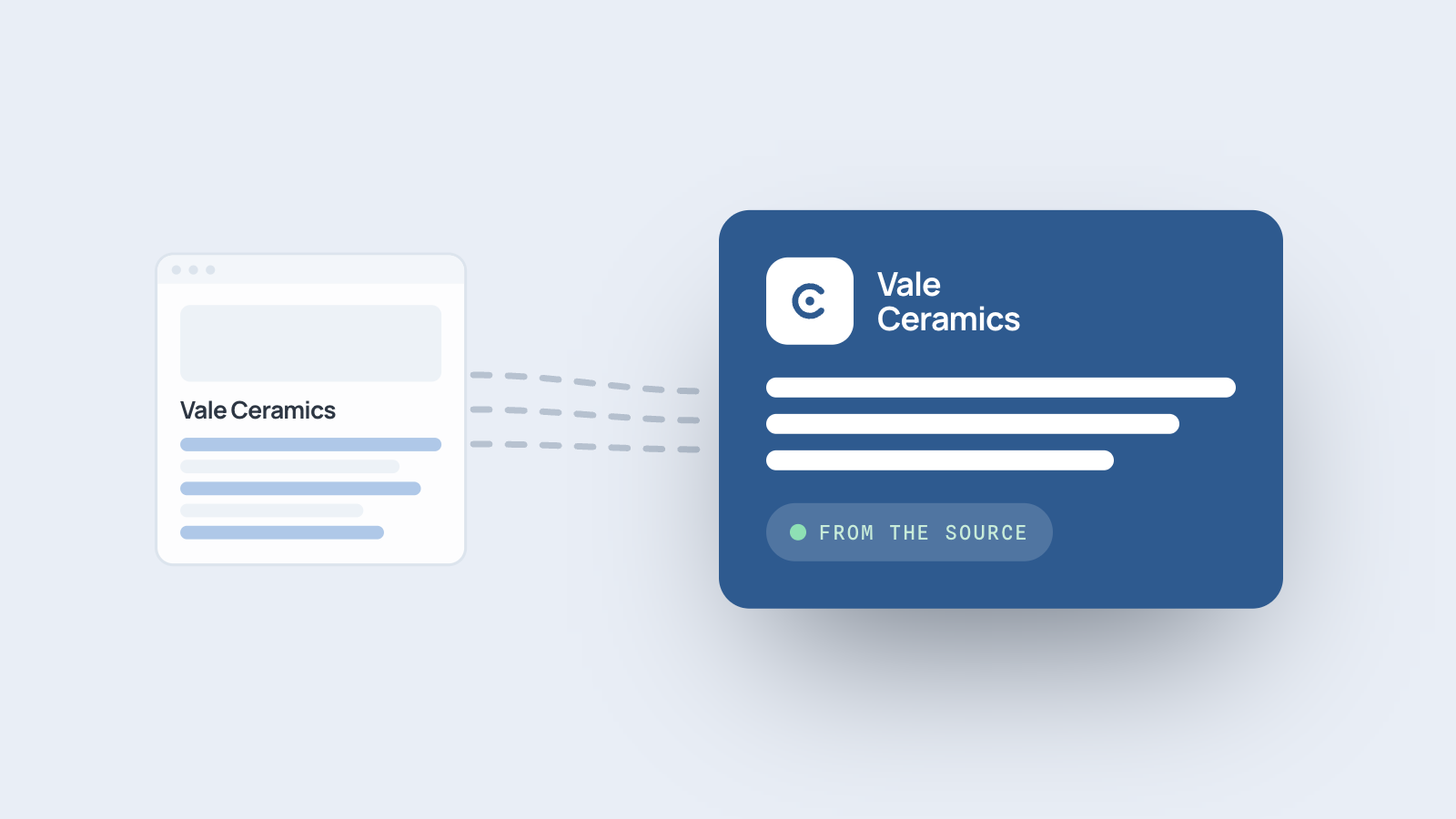
Two files per business. The profile itself, written as questions and answers in plain text. And next to it an evidence file: for every answer, the web address it came from and the exact sentence on that page that backs it up. Each answer in the profile carries a small marker pointing into that second file.
Making one starts with reading what the business has published about itself, writing down what a customer would want to know, and answering only where there is a source.
Why the sources live in their own file
Keeping the evidence separate looks like bookkeeping. We think it is the most important decision in the whole design. An answer can be translated, or corrected by the owner later on, and the proof behind it stays where it is.
It also means the source is never decoration. A crawler gets the link. A person can open it and read the original sentence for themselves.
Turning two files into a page an assistant can read
A few choices about the page itself have held from the start.
Everything is in the HTML the server sends, each question and answer with its source links. A crawler that never runs JavaScript still gets the whole page.
The business is described in schema.org structured data, and the questions go out a second time as an FAQPage block, so a machine does not have to work out the layout to know what is being asked and answered.
Each language gets its own version of the page, and every version links to the others. An assistant answering in Dutch should land on the Dutch page.
The lesson: nobody answers the everyday questions
What hit us hardest was how ordinary the missing answers were. Is there parking. Can you pay by card. Do I need to book. Can I bring the kids. People ask AI and search engines this kind of thing all day long, and a business's own website almost never answers it.
It makes sense once you see it. A website is written to impress, and to the owner "yes, we take cards" is too obvious to put on the homepage. To the person asking, it is the whole question.
So those questions stay open on the page, marked as open, and that list is what we hand to the owner. Nobody else can answer them.